Chemistry & elemental controlComposition · oxygen / nitrogen · purity
ICP spectrometer · oxygen / nitrogen analyser
Supports chemistry review Luyin Powders
Request a Quote
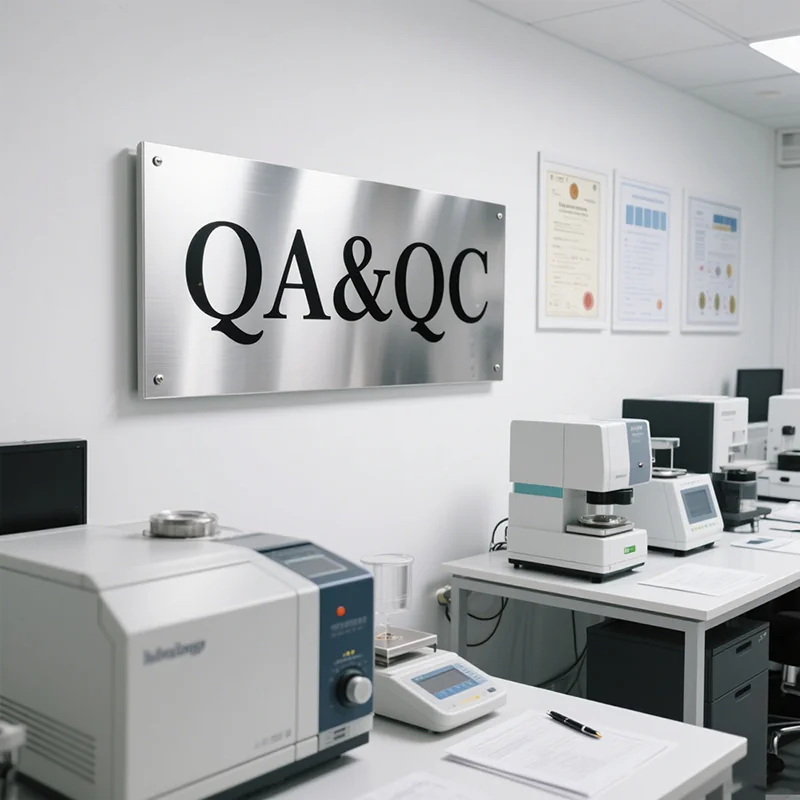
Manufacturing control, named laboratory methods and controlled documents are connected to the same product route—so purchasing and technical teams review one evidence chain.
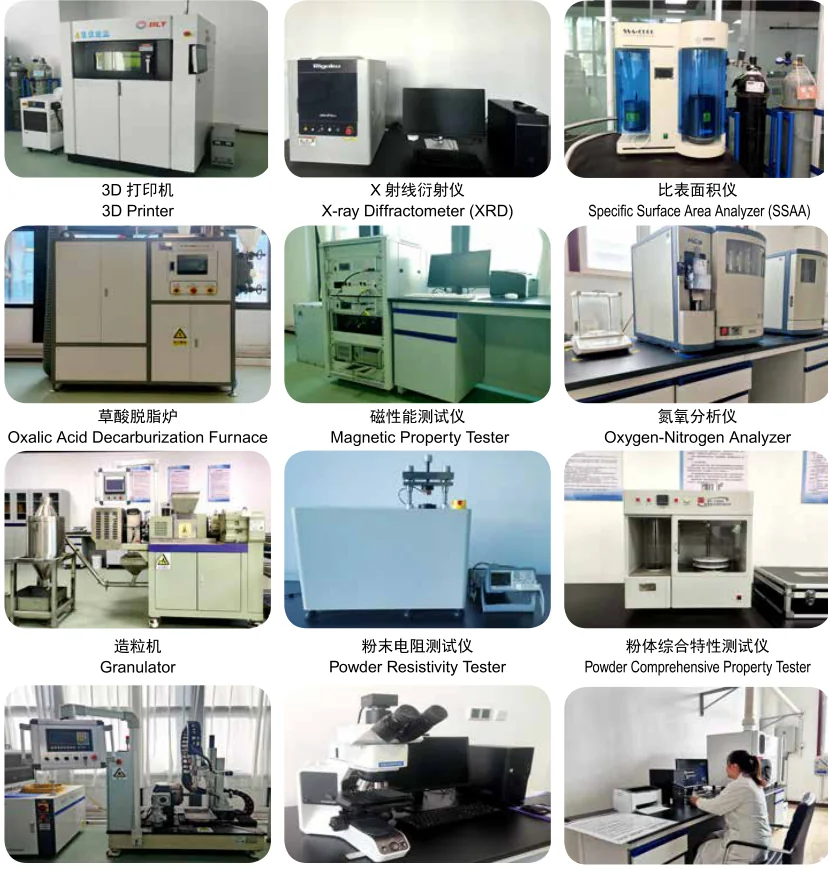
The authorised catalogue names the equipment below. A live product release still depends on the agreed method, current specification and batch evidence.
ICP spectrometer · oxygen / nitrogen analyser
Supports chemistry reviewX-ray diffraction · specific surface area · metallographic microscopy
Supports material identityScanning electron microscopy · powder characterisation equipment
Supports process matchingMagnetic-property tester · powder-resistance tester · comprehensive powder-property testing
Supports functional reviewThermal analyser · universal testing machine · vacuum sintering furnace · granulator
Supports qualification trialsThis quality-management sequence connects requirements, verification and release records. The complete manufacturing operations for each powder route are shown below.
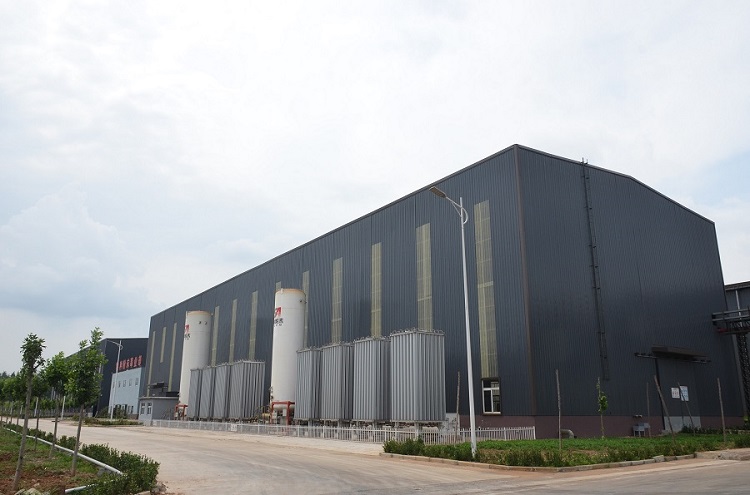
Trace each route from its feed materials to the finished powder. Raw-powder stages, separate feed treatments and alternative finishing paths are retained from the catalogue.

Feed materials
Follow the numbered sequence.
Possible downstream routes for this powder
Downstream processing is selected for the required product; it is not an additional step for every grade.

Feed materials
Prepare both feed materials separately, then bring them together at loading.
Follow the numbered sequence.

Feed materials
Both feed materials enter the melting stage.
Follow the numbered sequence.
Possible downstream routes for this powder
Downstream processing is selected for the required product; it is not an additional step for every grade.

Alternative base powders
Select the base powder for the formulation; these are alternative starting routes.
Follow the numbered sequence.
Possible downstream routes for this powder
Downstream processing is selected for the required product; it is not an additional step for every grade.

Alternative base powders
Select the base powder for the formulation; these are alternative starting routes.
Follow the numbered sequence.

Feed materials
Follow the numbered sequence.

Feed materials
Follow the numbered sequence.
After drying: two alternative finishing paths
Use the applicable finishing path for the selected powder. The two paths are alternatives.

Feed materials
Follow the numbered sequence.
Production diagrams adapted from the catalogue, printed pages 12–15. Batch blending corresponds to the catalogue term “equalizing”. Processing conditions and the route for a selected grade are confirmed against its requirements; actual batch results follow the COA.
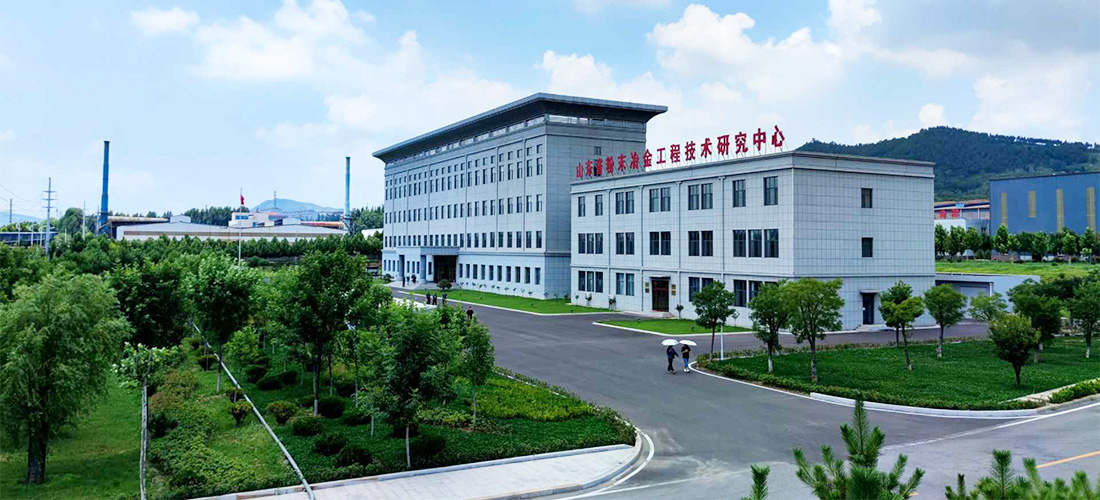
Four provincial R&D platforms, 65 patented technologies and participation in 11 standards describe the technical foundation. They do not replace product-specific TDS, agreed test methods or batch COA.
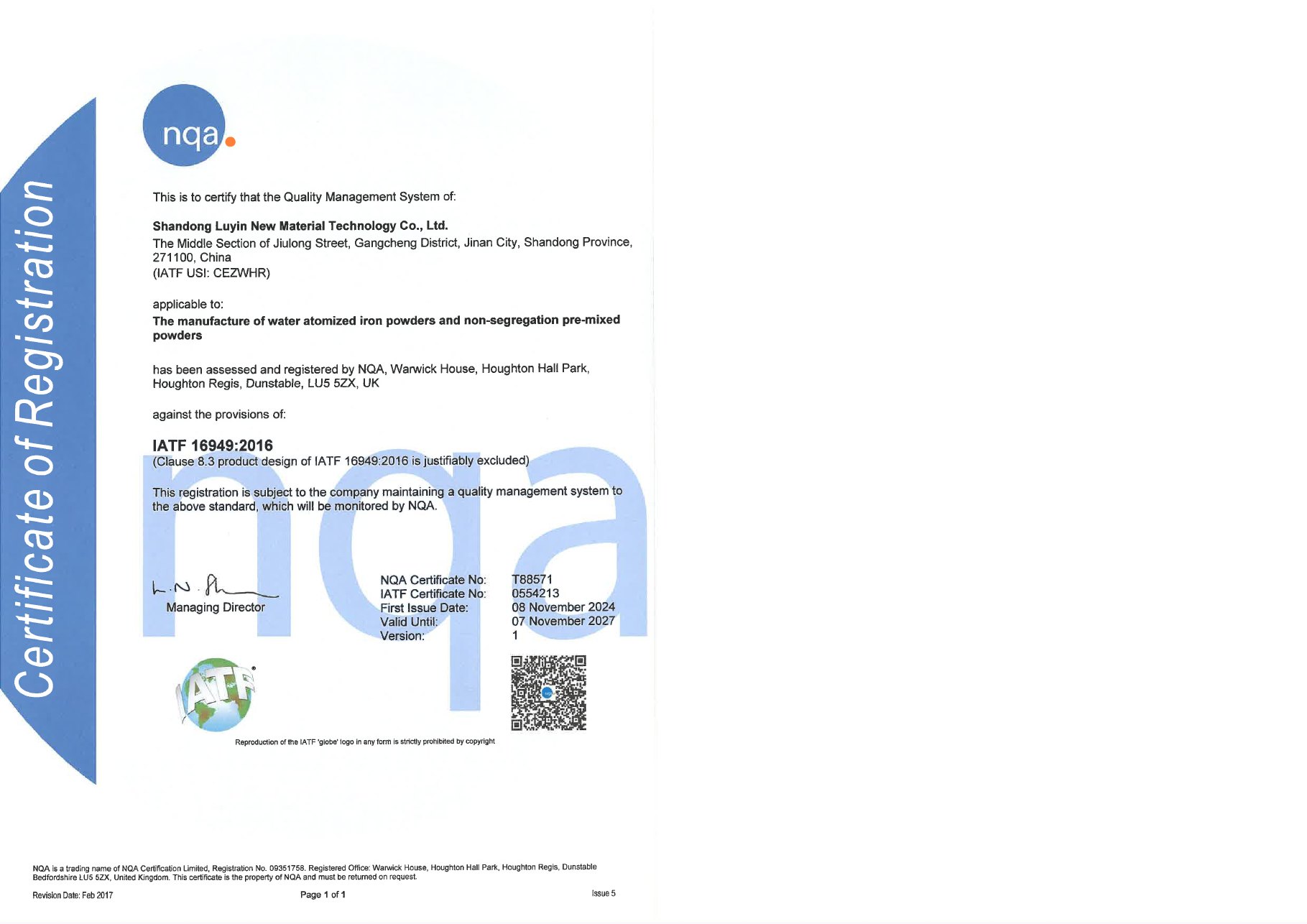
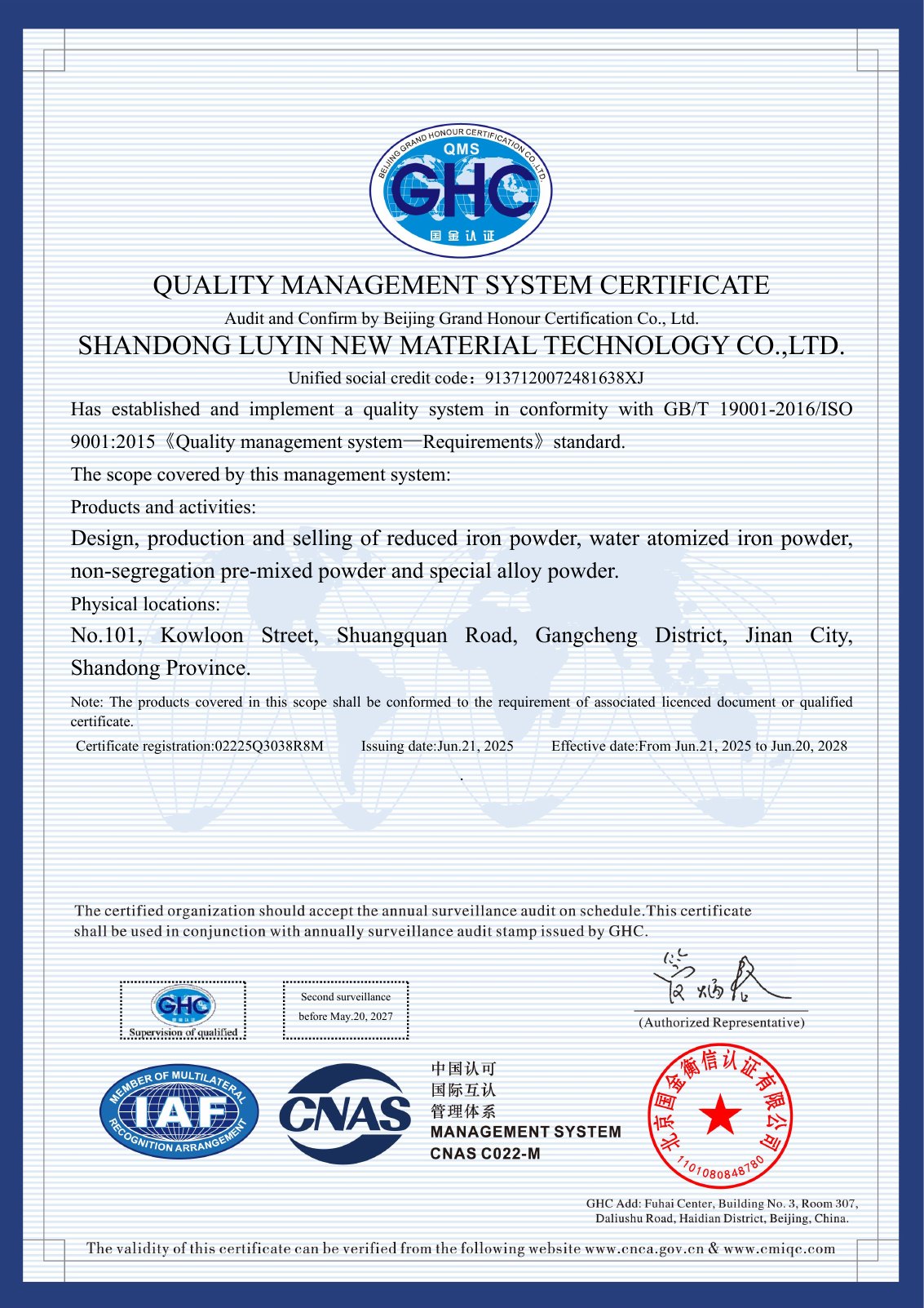
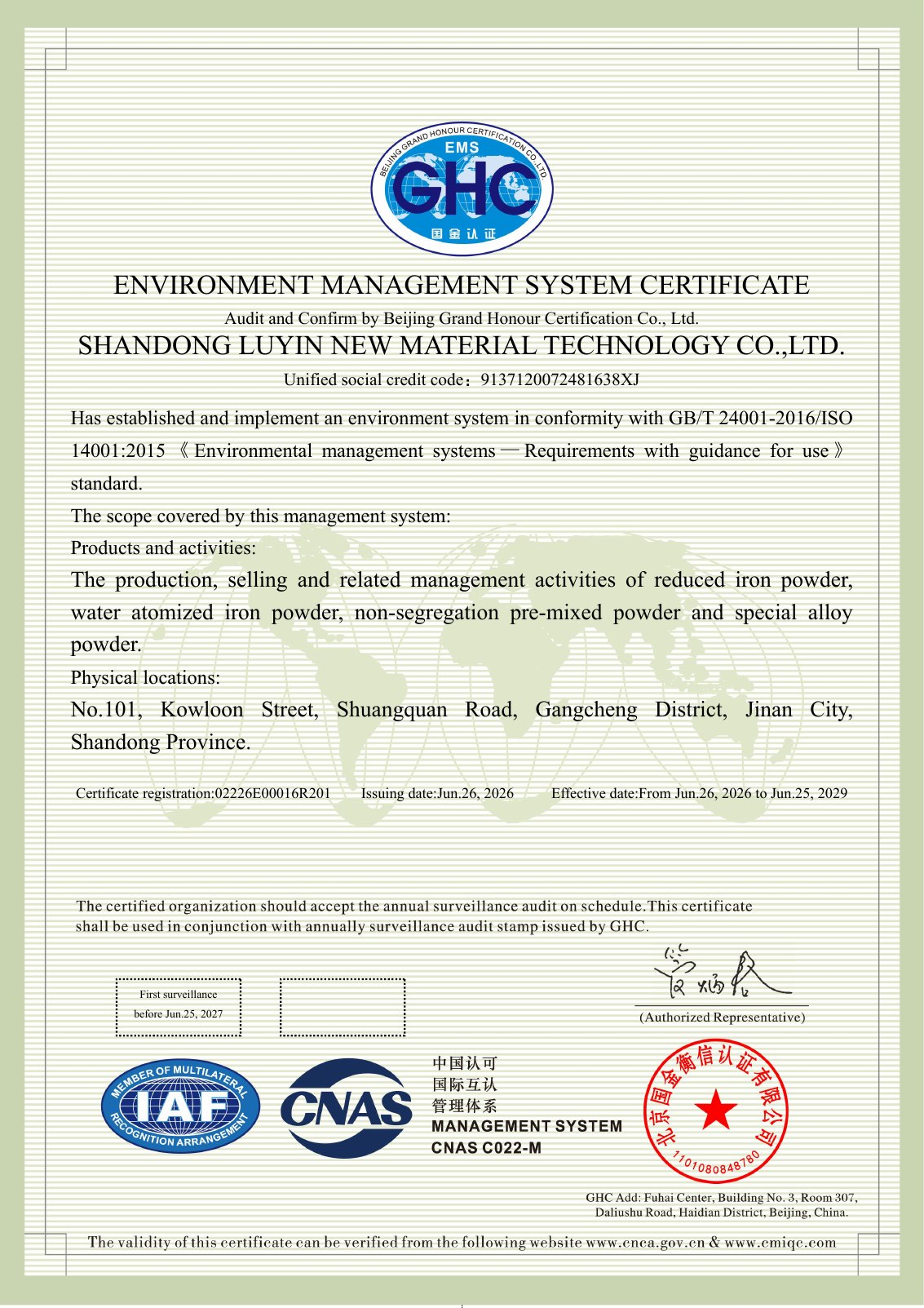
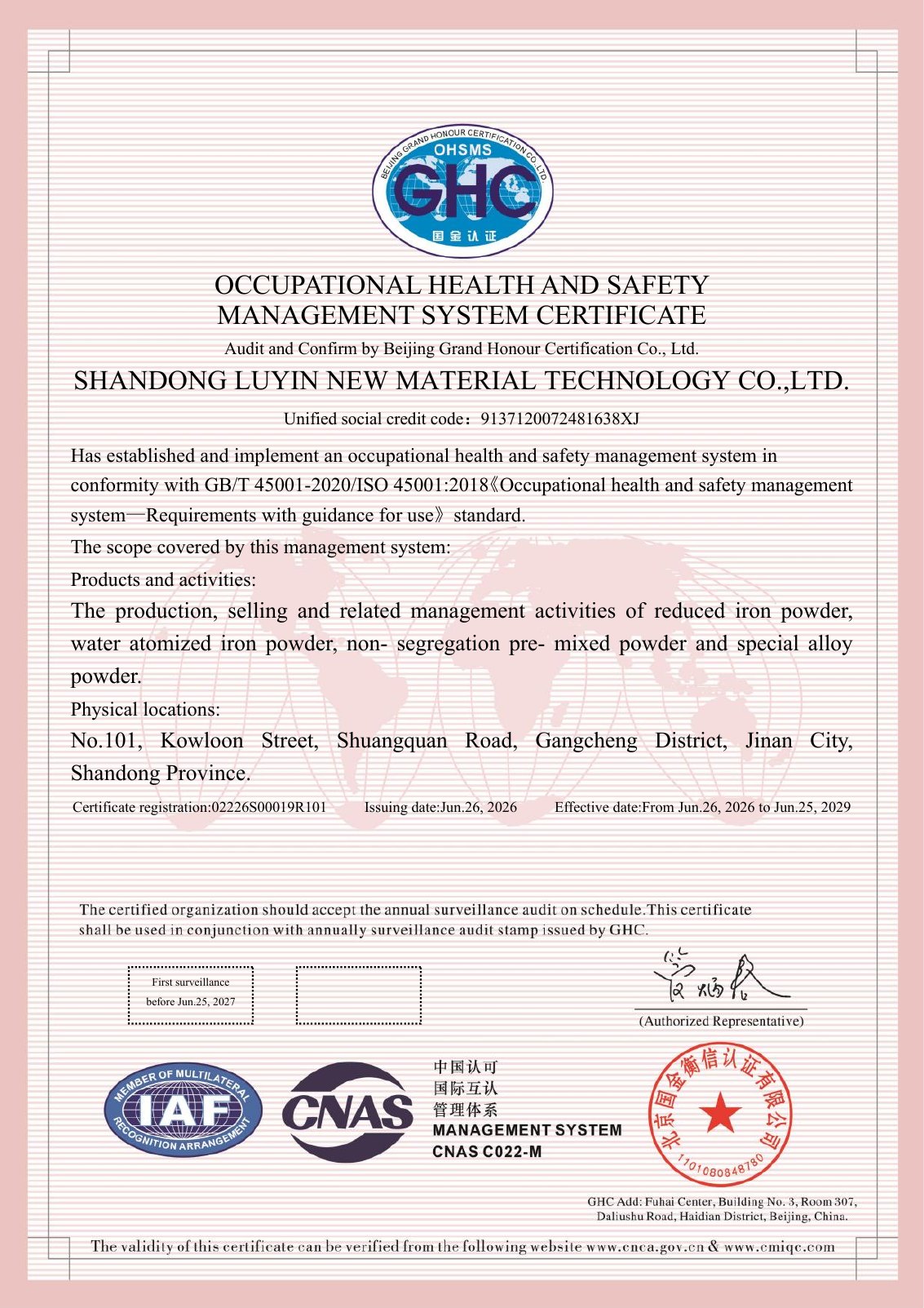
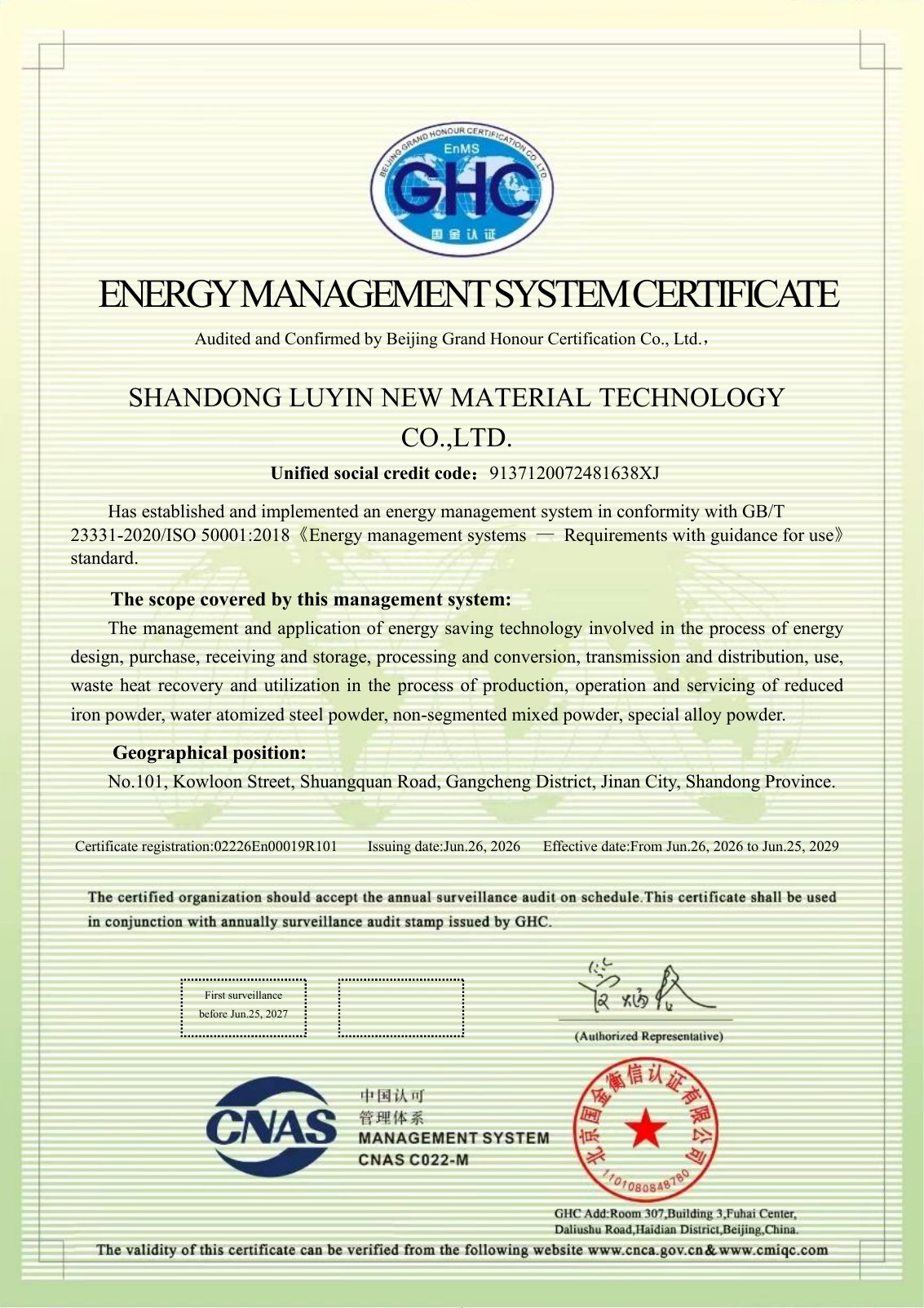
Five current English certificate copies name Shandong Luyin New Material Technology Co., Ltd. The scope and end date below follow each supplied certificate; ongoing validity remains subject to scheduled surveillance and issuer or registry status.
State the product, current grade, test method and document requirements. The initial technical response is provided within 24 hours.